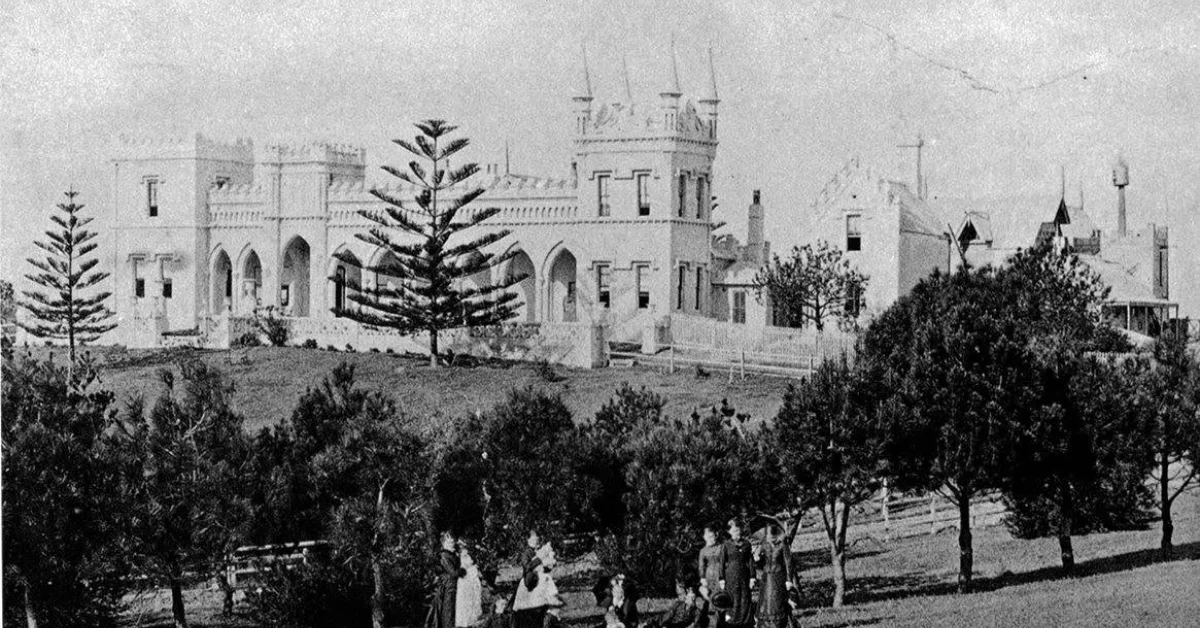
Mundarrah Towers once stood above Clovelly Bay on an estate that began with Dr Dickson’s earlier residence and later took on its castellated form under Samuel Bennett.
From Little Coogee To Mundarrah Towers
The property’s recorded European history stretches back to 1834, when William Charles Greville paid £40 for 20 acres of beachfront land at Little Coogee, as the area was then known.
Dr Dickson later built a residence called Rock Brook and developed elaborate grounds around the house. Historical descriptions of his work refer to extensive landscaping, including levelling, terracing and embankments.
The estate changed ownership several times. Dr Dickson sold it to John Campbell in 1860, when the house was renamed Aberburnie. Campbell sold the property two years later to George Renwick, who soon transferred it to Samuel Bennett, owner of the Australian Town and Country Journal.


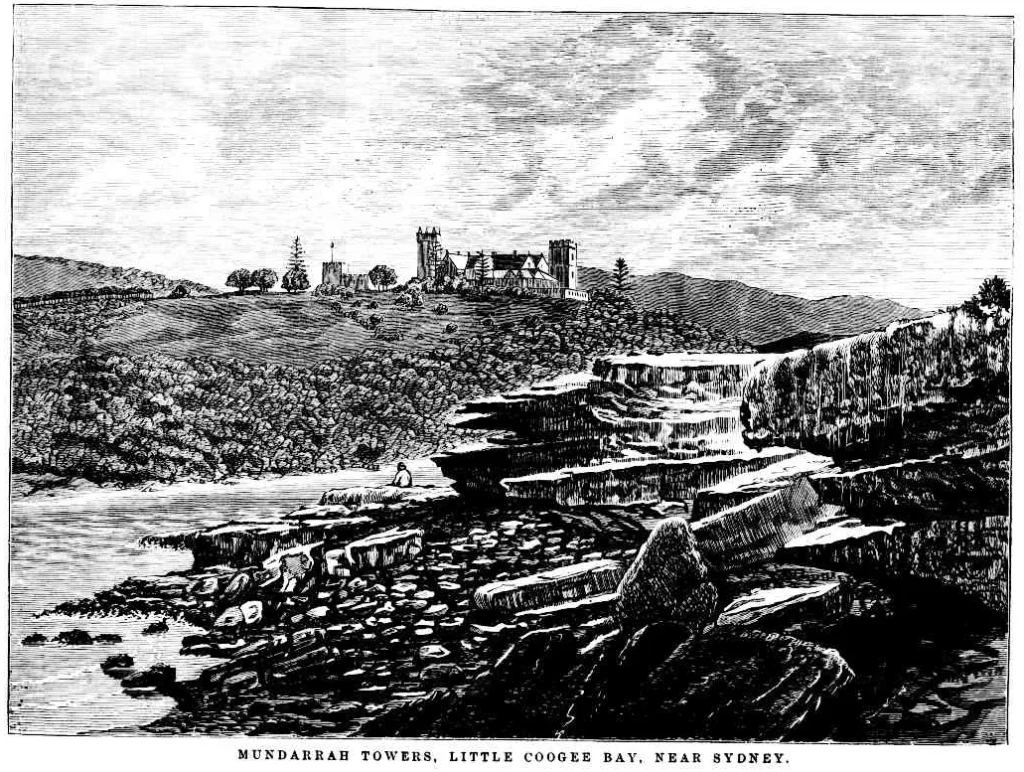
Bennett substantially enlarged the existing residence. His additions incorporated the earlier house and produced the castellated building remembered as Mundarrah Towers.
A nineteenth-century description recorded a cloistered frontage with embattled towers at either end and a frontage extending more than 100 feet. The property also featured a decorated façade, an enclosed northern lawn supported by a crenellated stone wall and verandahs along its sea-facing side.
The grounds surrounding the residence included grassy slopes, pine trees, retained bushland and running water leading towards the sheltered bay.
Racehorses Behind Mundarrah Towers
The Dickson period also included a distinctive connection with horse racing.
Miss Dickson used the flat headland behind the estate as an exercise ground for a stud of racehorses and personally supervised their training. Historical descriptions place several horses on the exposed coastal ground behind the residence.
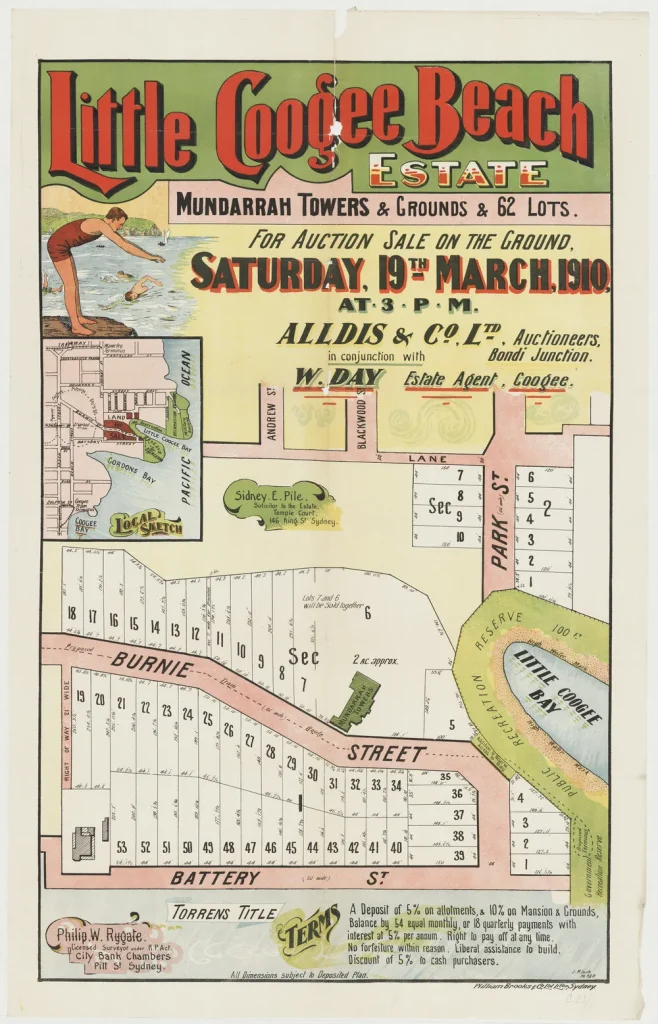
While substantial work had already been carried out on the grounds under Dr Dickson, Bennett later made extensive changes to the house itself, incorporating the earlier structure into the larger Mundarrah Towers residence.
Clovelly Develops Around The Estate
The area surrounding Mundarrah Towers changed further during the early 20th century as subdivision accelerated.
Clovelly’s subdivision was under way by 1909, while completion of the tram extension in 1913 contributed to the development of the former Little Coogee settlement. By the 1920s, residential growth was reshaping the suburb.
Mundarrah Towers was demolished in 1926 as the former estate made way for suburban development.
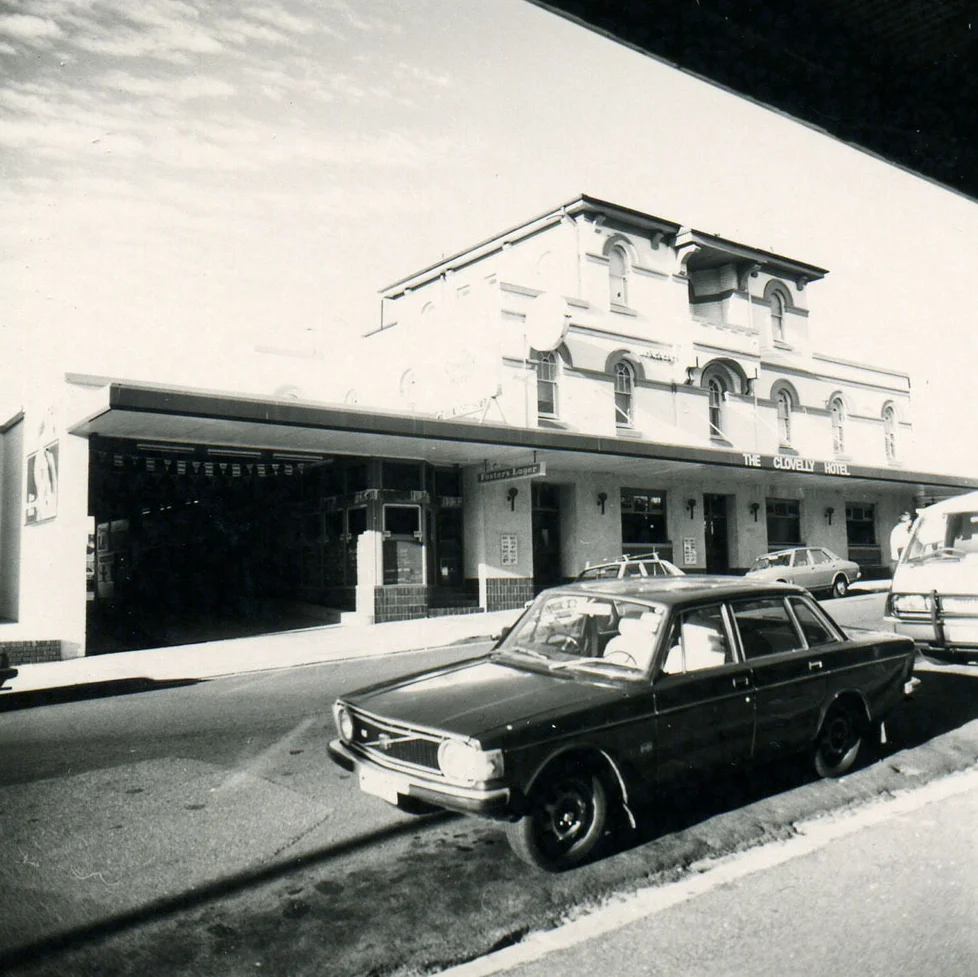
Some of the land once occupied by the Mundarrah Towers estate later became part of the site of the Clovelly Hotel.
The mansion itself is gone, but its name remains within the local streetscape. Mundarrah Street continues to commemorate the estate that once overlooked the western end of Clovelly Bay.
Published 11-September-2026